Why the Elliptical Leaves Your Hip Flexors Tight
Quick Answer: The elliptical keeps your hip in a fairly narrow range and never fully extends it - your trailing leg does not travel behind your body the way it does when walking or running. Combine that with a slight forward lean into the handles, and the hip flexors work continuously in a shortened position for the whole session. That is a recipe for post-session tightness. The fixes are posture-based: stand tall rather than leaning on the handles, lengthen the stride setting if your machine allows, drop the incline, and add two minutes of hip extension work afterwards.
The elliptical is meant to be the gentle option. Low impact, joint-friendly, nothing eccentric enough to leave you sore.
So it is genuinely confusing to step off after thirty easy minutes with the front of your hips feeling tight and short - the exact sensation you would associate with sitting at a desk all afternoon.
Which turns out to be the clue. What the machine is doing to your hips has more in common with sitting than with running.
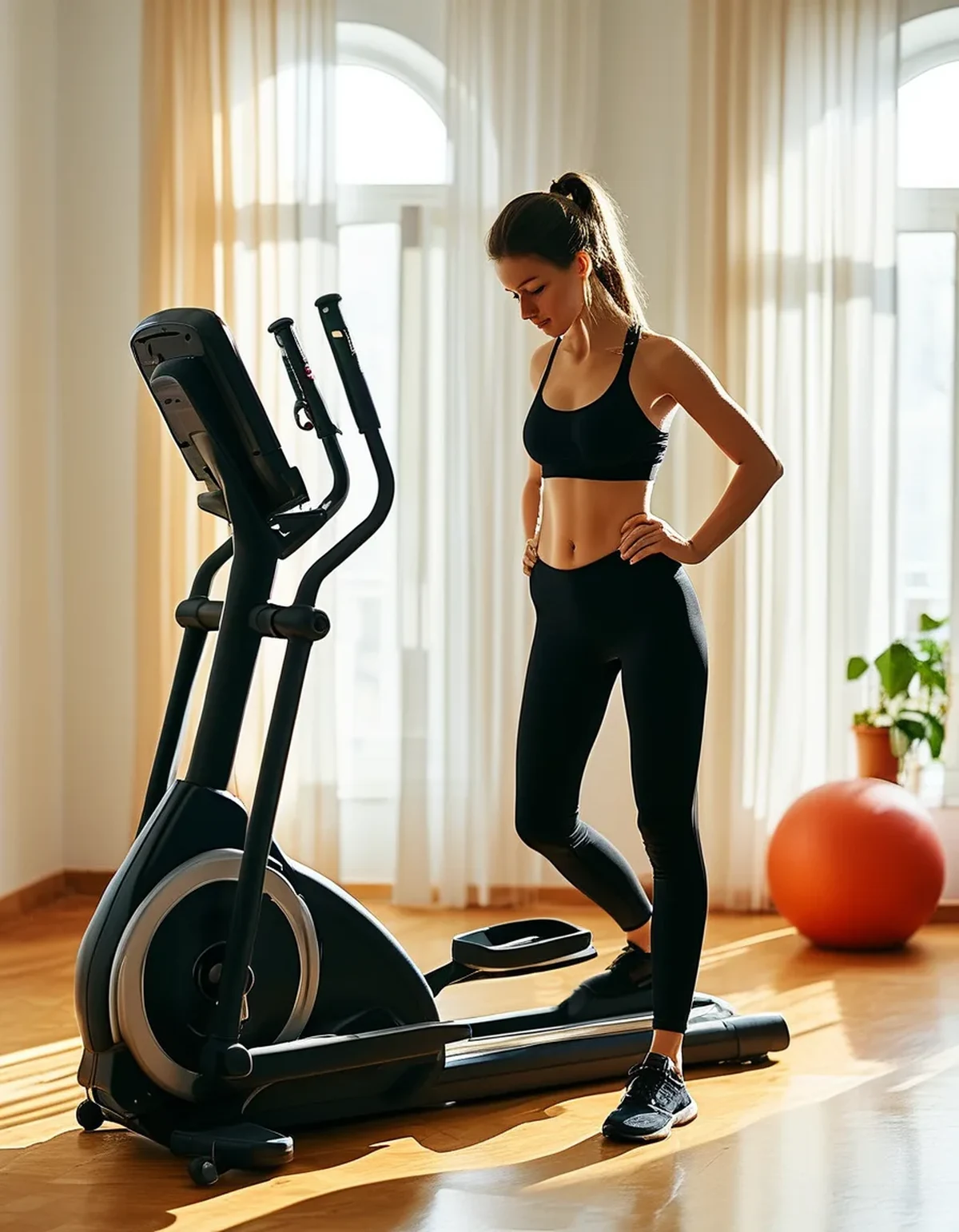
What is the elliptical actually doing to your hip?
Keeping it in flexion the entire time, and never letting it extend.
Think about walking. Your trailing leg travels behind your body, and the hip goes into genuine extension - the thigh moves rearward past your torso. That extension does two useful things: it lengthens the hip flexors under load, and it makes the glutes work to produce it.
The elliptical does not do this. The foot travels on a fixed elliptical path determined by the crank length and stride setting, and on most machines that path keeps the hip in some degree of flexion throughout. The trailing leg goes down and back a little, but the hip never opens past neutral.
So across thirty minutes you have taken the hip through several thousand repetitions in a restricted range that never includes extension. The hip flexors - psoas, iliacus, rectus femoris - stay short, working continuously, and never lengthen.
Two things make it worse:
Forward lean on the handles. Leaning into fixed handles tips the pelvis and torso forward, which puts the hip into more flexion at every point of the stride. This is the biggest single contributor and it is almost universal, because leaning is comfortable and the handles are right there.
Incline settings. Raising the incline shifts the stride path upward, increasing hip flexion throughout. Effective for targeting glutes in theory; in practice it deepens the same problem for most people.
And this is why it feels like desk stiffness: sitting is also sustained hip flexion. If you sit all day and then do thirty minutes of restricted-range hip flexion, you have effectively extended the workday.
Where does posture go wrong?
Almost always in one of four places, and they compound.
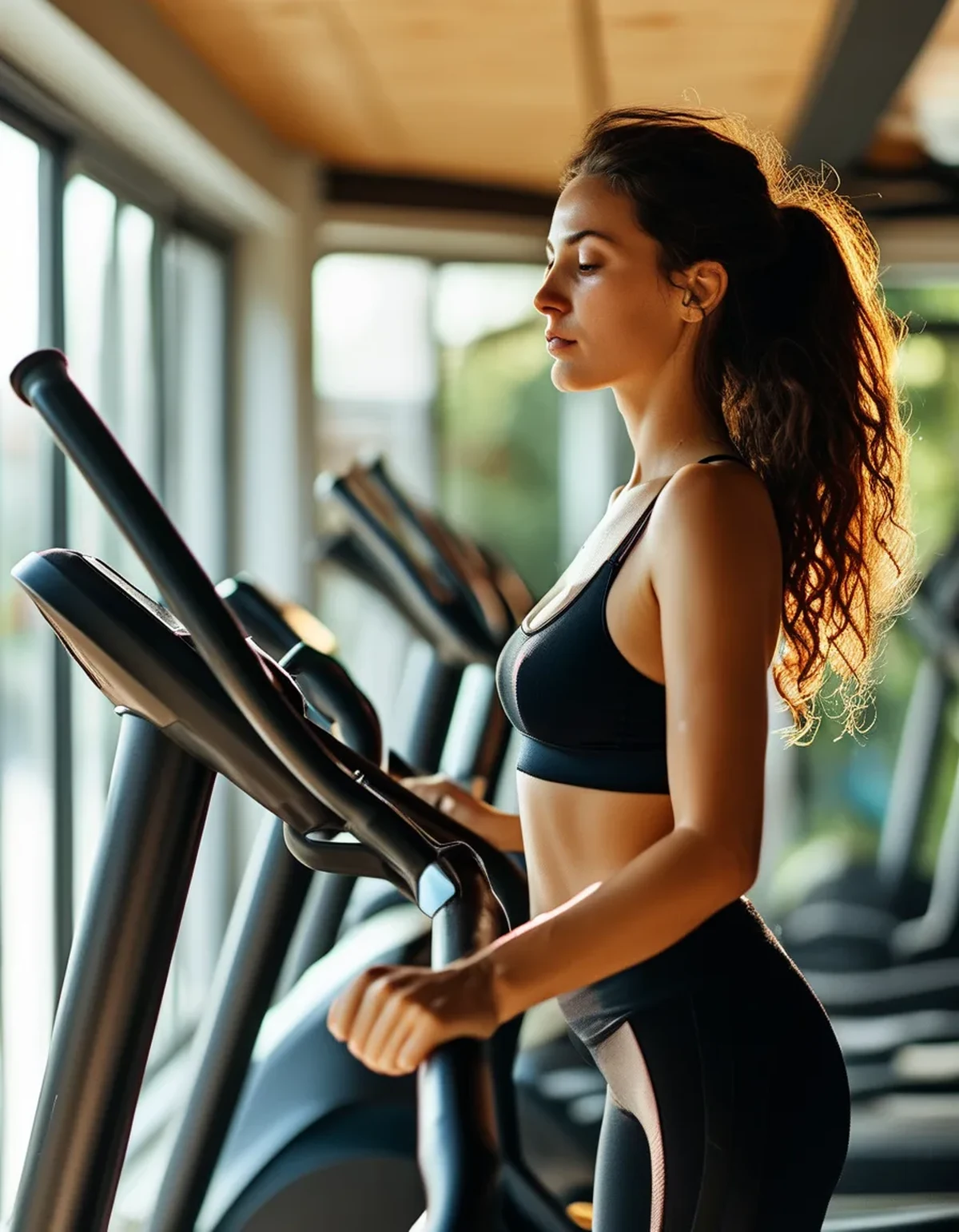
1. Leaning into the handles. The single most common error. It reduces the work your legs do, shifts load into your arms and shoulders, and tips the pelvis forward into more hip flexion. The test: let go of the handles for ten seconds. If you lurch forward or immediately slow down, you were leaning rather than holding.
2. Gripping the moving handles too hard. Related, and it produces shoulder and forearm tension while also encouraging you to pull yourself forward.
3. Looking down at the console. Head down leads to upper back rounding, which leads to the pelvis tipping and the hip staying more flexed. Screens sit low on most machines, and the eyes follow.
4. Stride length set too short. Many machines have adjustable stride, and short is often the default. A short stride keeps the hip in a narrower range with less extension, and it also feels easier, so it does not get questioned.
What good position looks like:
- Tall through the spine, ribs stacked over pelvis rather than leaning forward
- Hands resting on the handles, not bearing weight - you should be able to let go without changing anything
- Eyes forward, not down at the display
- Weight through the mid-foot, not the toes
- Longest stride setting you can maintain comfortably
Test it: if you can let go of the handles entirely and keep the same cadence and posture for twenty seconds, your position is fine. If you cannot, that is the thing to fix before anything else.
What settings actually help?
Three adjustments, and they are worth trying in this order.
Lengthen the stride. If your machine offers adjustable stride length, increase it. A longer stride takes the hip through a greater range and gets you closer to actual hip extension. It will feel harder at the same resistance, which is a sign it is doing more.
Reduce the incline. Higher incline means more hip flexion throughout the stride. If your hips are the complaint, lower incline and more resistance is a better combination than the reverse. Incline and resistance are not interchangeable - they change different things, and incline is the one that affects hip position.
Add backward pedalling in intervals. Reversing the direction changes the muscle emphasis and the way the hip moves through the path. Two or three minutes of backward pedalling every ten minutes breaks up the repetitive pattern, which is worth more than it sounds after thousands of identical repetitions.
And vary the session rather than repeating it identically. The problem is not the elliptical, it is doing exactly the same restricted movement for thirty unbroken minutes. Intervals, direction changes and resistance variation all help, and they make the session less boring anyway.
One further point about the machine itself. Ellipticals vary enormously in stride path geometry - some have a flatter, more walk-like path and some a steeper, more stepping-like one. If one machine at your gym consistently leaves you tight and another does not, that is the geometry rather than your form, and the answer is to use the other machine.
What should you do afterwards?
Two minutes, and it targets exactly what the session shortened.
Half-kneeling hip flexor stretch. Kneel on one knee, other foot forward, and tuck the pelvis under before leaning forward - the tuck is the part people skip and it is the part that makes it work. Without it you are extending your lower back rather than stretching the hip. Hold 30 seconds each side.
Standing hip extension. Stand tall, squeeze the glute on one side, and drive the leg straight back without arching your lower back. Ten slow reps each side. This is active rather than passive, and it teaches the movement the machine never allowed, which is more valuable than the stretch.
Glute bridges. Ten to fifteen reps. Hip extension under load, with the glutes doing the work rather than the lower back. The most useful single movement here.
Couch stretch, if you have a wall - the more intense hip flexor stretch, with the rear foot elevated. Only if the half-kneeling version has stopped producing much.
Timing: immediately after the session while the tissue is warm. Two minutes, and it addresses the specific thing thirty minutes on the machine just did.
And a broader point worth making. If your hip flexors are consistently tight, the elliptical is unlikely to be the only cause - sitting is almost always the larger contributor, and the machine is adding to an existing load rather than creating it. Adding hip extension work to your week in general will do more than any adjustment to the elliptical.
General information, not medical advice. Hip pain, as opposed to tightness, or pain that persists after training should be assessed by a physiotherapist or a doctor.
FAQ: Elliptical and Hip Questions, Answered
Is the elliptical bad for your hips?
No - it is genuinely low-impact and joint-friendly, which is why it is recommended for people managing knee and hip issues. The tightness discussed here is a range-of-motion issue rather than a damage issue: the hip works in a restricted range without extension. The fix is posture and follow-up mobility work, not avoiding the machine.
Should I hold the handles at all?
Rest your hands on them, but do not bear weight through them. The moving handles do add upper-body involvement, which is a real benefit of the machine, but only if you are pushing and pulling rather than hanging on. The letting-go test settles it: if you cannot release the handles and maintain the same cadence and posture, you are leaning.
Why does the treadmill not do this?
Because walking and running take the hip into genuine extension - the trailing leg travels behind the body and the hip flexors lengthen under load with every stride. The elliptical’s fixed path does not allow that. It is also why the elliptical is easier on the joints: less range and no impact are the same trade-off viewed from two directions.
General information, not medical advice.
TL;DR:
- The elliptical keeps your hip in flexion the whole time and never lets it extend - closer to sitting than to running.
- Leaning on the handles is the biggest contributor. If you cannot let go for ten seconds, that is the fix.
- Lengthen the stride, lower the incline, and add backward pedalling intervals to break the repetition.
- Afterwards: half-kneeling hip flexor stretch with a pelvic tuck, standing hip extensions, and glute bridges. Two minutes.
- Different machines have different stride geometry - if one leaves you tight and another does not, that is why.
The machine is not the problem. Thirty minutes of the same restricted hip position, leaning forward on a set of handles, is - and both halves of that are adjustable.
Keep Reading
This article is for general informational and styling purposes only. Fit, sizing, and product availability may vary.